
في هذا المقال
The Digital Gold Rush: How Cryptocurrencies Are Reshaping Wealth
For centuries, gold has held an unparalleled position as the global standard of wealth and a definitive hedge against economic instability. However, a new paradigm is emerging in the 21st century. The quiet hum of server farms is replacing the pickaxe, and cryptographic keys are superseding bank vaults. We are in the midst of a 'Digital Gold Rush,' led by cryptocurrencies, and this technological movement is fundamentally reshaping how wealth is generated, stored, and conceptualized.
The genesis of this shift can be traced to the aftermath of the 2008 financial crisis. The launch of Bitcoin in 2009 introduced the concept of a decentralized ledger—the blockchain—that did not rely on a central authority, such as a government or a bank. This foundational innovation, as highlighted in 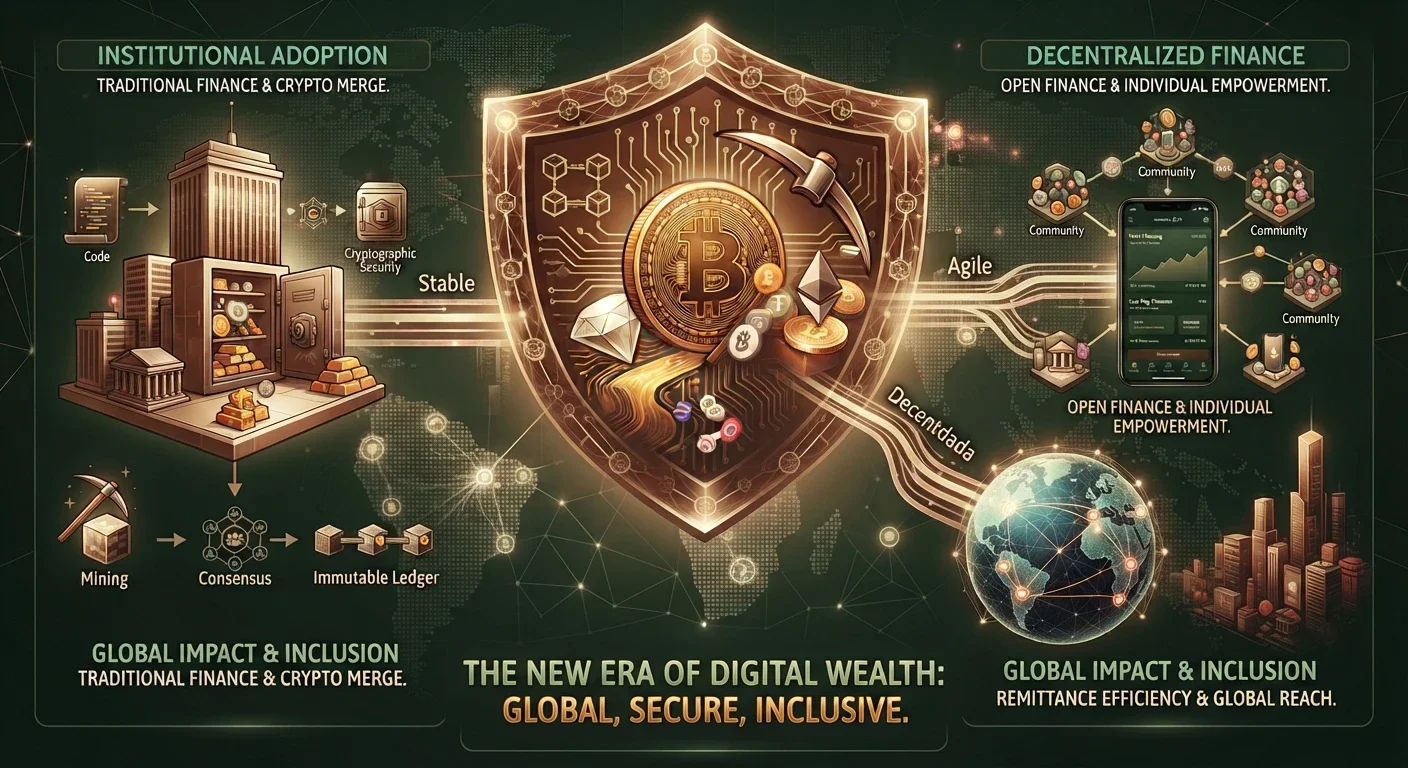
One of the primary drivers of this reshaping of wealth is the rapid institutional influx into the market. While cryptocurrencies were once dismissed by the traditional financial establishment, today major institutions are integrating these digital assets into their portfolios. Global banking giants and major corporations (like those represented by the "Bank" and "Corporate" icons in are now treating Bitcoin not as a toy, but as a legitimate asset. This institutional adoption provides validation and, crucially, massive capital flows. A clear sign of this maturation is the increasing use of "Stablecoins," which peg their value to traditional fiat currencies to offer low volatility for transactions and settling institutional trades. The presence of stablecoins, code, and banks together in the foundations of this ecosystem shows that the old and new worlds of finance are not just coexisting, but are merging.
Furthermore, the impact of cryptocurrencies is truly global, creating financial inclusion on a scale previously thought impossible. The digital nature of these assets allows for instant "Global remittance," bypassing slow and expensive traditional banking corridors. This is a crucial element of the global impact illustrated in . Individuals in countries with unstable currencies can use cryptocurrencies as a stable store of value, effectively utilizing a decentralized form of financial inclusion. The "Global Impact" panel in with its focus on "Financial Inclusion" makes this clear. A resident in an emerging economy can build and preserve wealth with nothing more than a smartphone and internet access, bypassing the need for a physical bank branch or a national currency that may be rapidly devaluing.
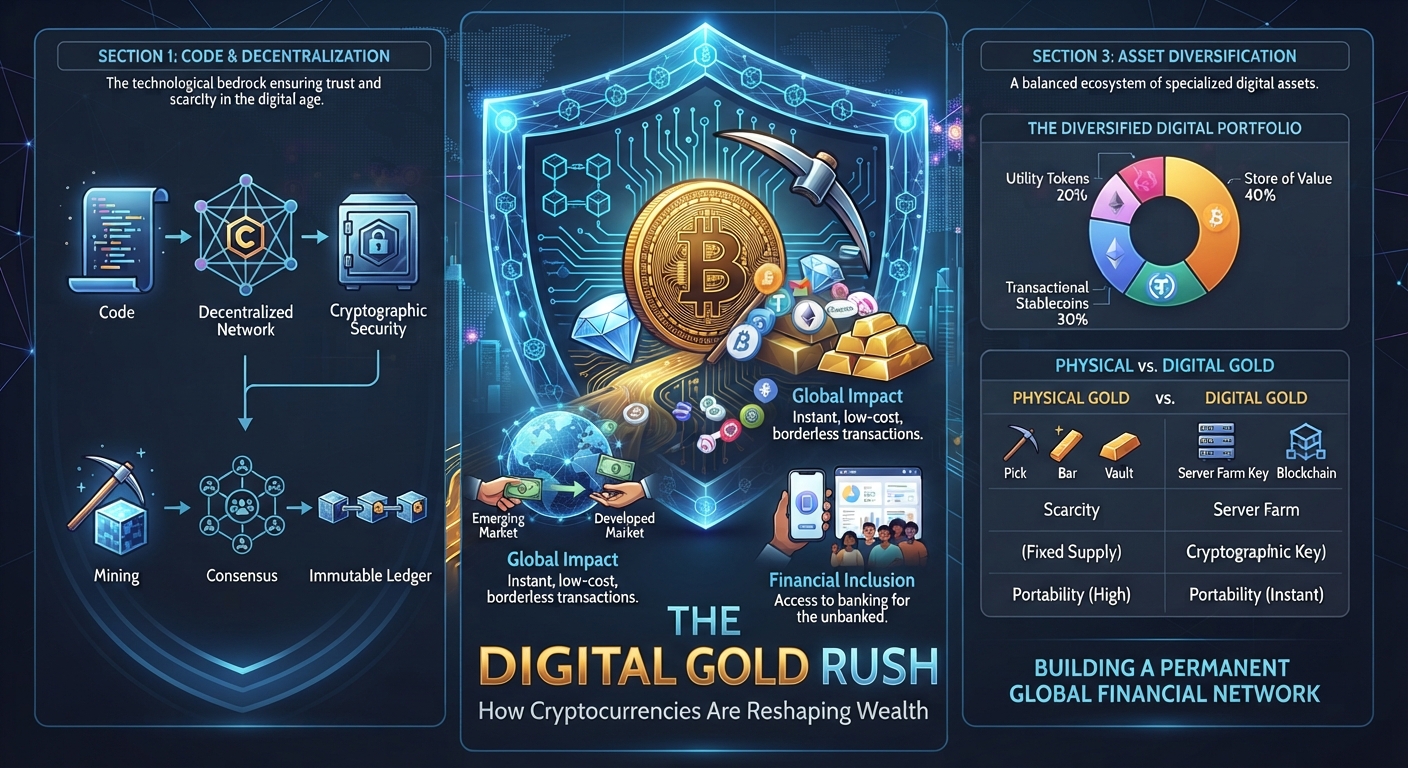
The phrase "Digital Gold" is more than just a marketing term; it is a conceptual framework that explains Bitcoin's enduring appeal. Much like physical gold, Bitcoin has a fixed and verifiable supply, capped at 21 million coins. This programmed scarcity makes it an attractive hedge against inflation, particularly when central banks around the world are printing fiat money at an unprecedented rate. The "Bitcoin" and "Stablecoin" elements in show how different assets have found distinct roles: Bitcoin as a long-term store of value, and Stablecoins as a stable unit of exchange. This diversification is key to how a digital portfolio can represent resilient, modern wealth.
The "shield" motif in is particularly apt. Wealth today is not just about accumulation, but also protection. Cryptocurrencies, with their inherent cryptographic security, offer a strong shield against arbitrary state confiscation or capital controls. The shield surrounding the central elements in the visualization reinforces this idea. Bitcoin, the pickaxe, and gold bars are not just valuable; they are protected by a network that no single entity can control. This concept of sovereign, portable, and secure wealth is a radical departure from the geographically fixed and politically vulnerable wealth of the past.
In conclusion, the Digital Gold Rush is a multifaceted phenomenon. It is not merely about a few people making a lot of money; it is a profound restructuring of the global financial architecture. Cryptocurrencies are reshaping wealth by providing a decentralized and transparent framework for its creation and storage. They are offering a conceptual upgrade, transforming the idea of a store of value from a yellow metal to a secure, decentralized digital ledger. While the physical gold rush of the past created boomtowns that often turned to ghost towns, the Digital Gold Rush is building a permanent, global, and highly scalable financial network. As the visualization in so eloquently summarizes, the foundations are set in code and decentralized networks, and the future is built on their integration into the global economy. Those who embrace this new paradigm are participating in the defining gold rush of our era, not just for personal gain, but for the fundamental reshaping of how our world understands and manages wealth.
تابع جديد Adel
اختر إشعارات الموقع أو البريد أو الاثنين. الزائر يقدر يشترك ببريده دون تسجيل حساب.
الإبلاغ عن المقال
لو لاحظت مشكلة في المحتوى، أرسلها لفريق المراجعة. لن تظهر بياناتك لكاتب المقال أو للقراء.
تعذّر إرسال البلاغ الآن. حاول مرة أخرى لاحقًا.
سجّل الدخول لإرسال بلاغ
النقاش
التعليقات (0)
فكرة تضيفها، أو سؤال يفتح حوارًا.
الرجاء تسجيل الدخول لتتمكن من التعليق